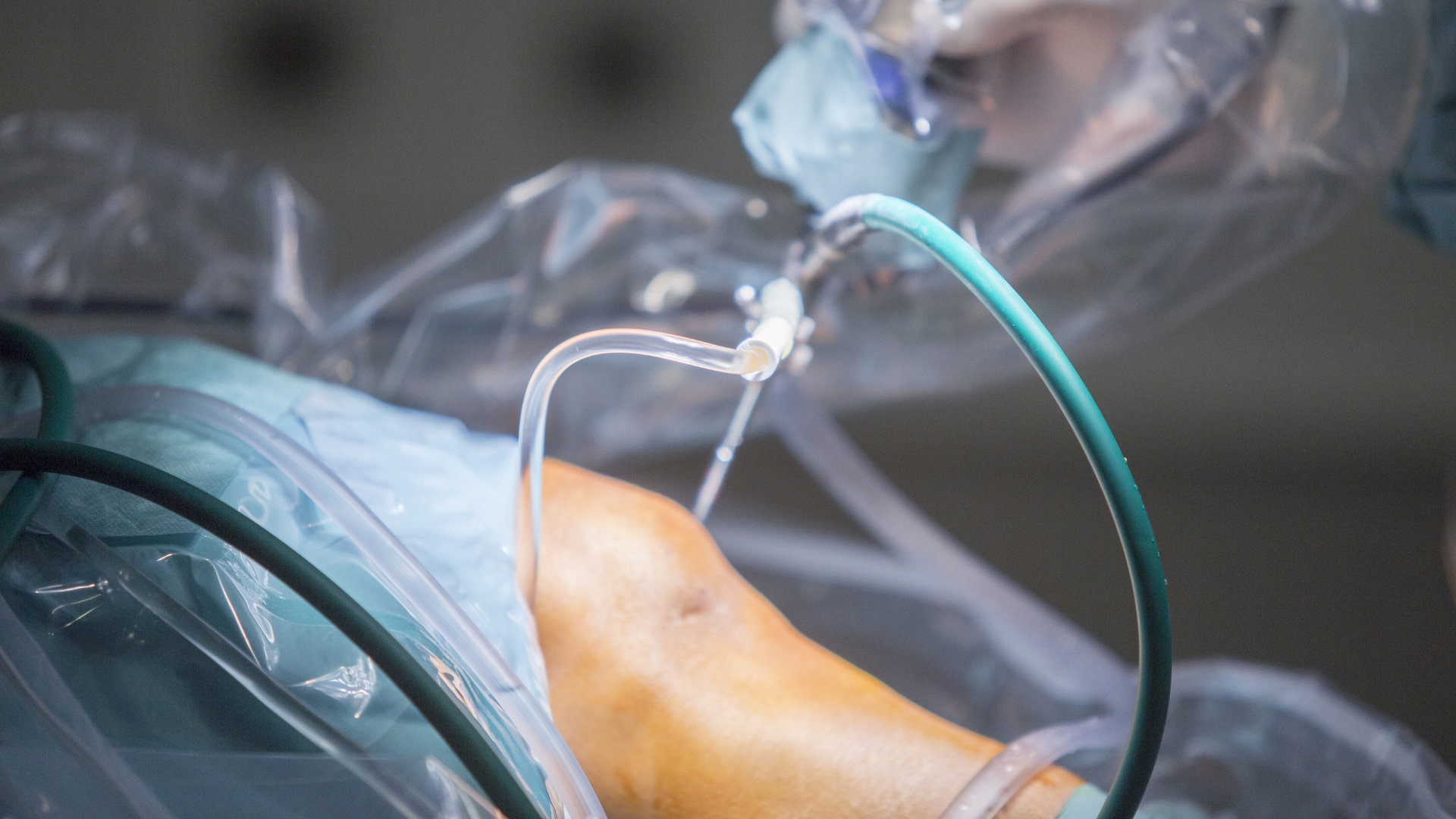
Knee Arthroscopy is a minimally invasive surgical procedure that makes tiny incisions to access the knee joint using cutting-edge equipment including high-definition cameras and LED lights. This method, which is carried out in a dedicated operating room that looks like a cockpit, reduces harm to healthy tissue.
Arthroscopy of the Knee Surgery is performed via tiny holes. The arthroscope, a tiny camera device roughly the size of a pencil, is inserted into the knee joint by the surgeon during the procedure. The surgeon can easily see and diagnose any issues by using the arthroscope to send images of the inside of the knee on a monitor. Small devices put through further incisions are utilized in this operation to remove or repair damaged tissue.
Preparing for total knee replacement surgery
You will be admitted to the hospital one day prior to the knee replacement surgery. To evaluate your health and find any possible problems that might prevent the surgery, your doctor might need to perform a thorough physical examination on you. Before the procedure, it is critical to let your surgeon know about any medications or supplements you take so that the team can advise you on whether to keep taking them. On the day before total knee replacement surgery, standard diagnostics like blood testing, an ECG, and a chest X-ray might also be carried out. Before the treatment, you will usually need to fast for six hours.
Arthroscopic Knee Surgery Process
Anesthesia
A member of the anesthesia team will go over your options with you when you get to the operating room for your knee arthroscopy. Both general and regional anesthesia are options for the surgery. While general anesthesia puts you to sleep, regional anesthesia numbs the area beneath your waist.
Whichever approach works best for you will be determined by the anesthesiologist. You might be able to observe the process on a monitor if you decide to have regional anesthetic.
Procedure
In order to increase visibility, the arthroscopy surgeon will make tiny incisions in your knee and inject it with saline during the surgery. After a thorough examination of the knee joint, a diagnosis is reached. The diagnosis is then used to plan the course of treatment.
Common Conditions Treated With Arthroscopic Knee Surgery Include:
Meniscal cartilage that has been ripped out or repaired,
repair of an anterior cruciate ligament tear,
removal of loose cartilage or bone pieces.
The wounds are sealed with threads, sutures, or staples. Make an appointment with Dr. Krunal Shah, one of the top orthopedic surgeons in Surat and a highly qualified orthopedic expert, for the best arthroscopic knee or total knee replacement surgery in Surat, Gujarat.
We offer unique health care treatment ideas and assistance, together with the highest caliber of technology available in our clinic.